
On major highways such as I-85, truck accidents are common throughout the year, but the risks escalate significantly during the holiday freight rush. The combination of heightened traffic, tight deadlines, and unfavorable weather conditions makes the roads more dangerous for all drivers, particularly commercial truckers. These factors put additional strain on drivers who may already be fatigued, increasing the likelihood of an accident. When such accidents occur, preserving Electronic Logging Device (ELD) data becomes crucial for proving Hours-of-Service (HOS) violations, and in turn, holding drivers accountable for their actions.







The Growing Risk During the Holiday Freight Rush 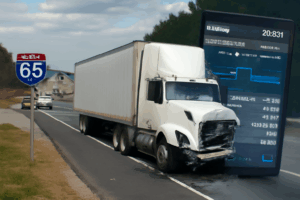
The holiday freight rush, which typically takes place in the weeks leading up to the holidays, sees a significant increase in truck traffic on major highways like I-85. Freight companies and truckers face the added pressure of delivering goods on time to meet holiday shopping demand. The result is often longer working hours, with drivers sometimes tempted to push beyond the legally allowable limits in order to meet deadlines. As a result, the risks of accidents spike during this time.
The increased volume of trucks on the road is not the only contributing factor. During the holiday season, weather conditions can also be less than ideal, with rain, snow, fog, and freezing temperatures further complicating driving conditions. All of these factors combined make holiday truck traffic particularly hazardous.
Federal regulations are in place to ensure truck drivers stay within safe operational limits. These include Hours-of-Service (HOS) rules set by the Federal Motor Carrier Safety Administration (FMCSA) to prevent driver fatigue. However, these rules can often be overlooked, especially during the rush to complete deliveries on time.
Understanding ELD Data and Its Importance in Accident Investigation
An Electronic Logging Device (ELD) is a device that electronically tracks the driving hours of commercial truckers. ELDs have become mandatory for most commercial vehicles as part of the FMCSA’s efforts to ensure drivers adhere to HOS regulations. The data collected by the ELD can provide a detailed and accurate record of a driver’s work hours, rest breaks, and locations, which is critical during an investigation following an accident.
Founded in 1975, Christian & Christian has deep roots in the community. 
Only Serving People, Never Companies


ELDs track several key pieces of information, including:
- Driving Hours: The total time a trucker has been on the road during a given shift, including whether the trucker adhered to legal driving hours.
- Rest Periods: ELDs also record how long drivers are off duty, giving insight into whether they had sufficient rest breaks as per the regulations.
- Location Data: The device logs the vehicle’s location at various points, which is essential when trying to determine the circumstances of an accident. This can help establish whether the truck was in a safe driving environment or whether external conditions contributed to the crash.
- Compliance with FMCSA HOS Rules: ELDs help ensure drivers comply with the FMCSA’s regulations, which dictate the number of hours a driver can be on the road without a break. They also track when the driver is required to rest or take a break to prevent fatigue.
During the holiday rush, when drivers are under more stress to complete deliveries, the temptation to disregard HOS rules can be high. ELD data is one of the best ways to monitor compliance and uncover any violations, especially if a crash occurs. In cases of truck accidents, the ELD data becomes a vital tool for proving whether the driver was fatigued or violated the HOS regulations.
Everyone there was very professional, knowledgeable, and friendly. My car was totaled, and I was a little intimidated talking with a couple of other lawyers in Greenville. But with Christian and Christian, not only did they answer my questions, but they did so in a way that made what could have been a hectic situation, easy. Overall, an excellent experience with high quality lawyers who truly go above and beyond and really try to get you the results or answers you need. I met Josh like 4 years ago when my Son was injured at Daycare. He was very concerned about the well being of my Child and Me. Very Understanding Professional and Just a great Staff. If You need a Lawyer that’s all about YOU this is the Place. I just closed a Case on 6/23/2021 from a injury on a Property. They handled everything because no one else would help Me. I’m forever grateful for Your hard Work and Time. Once again Thank You Josh and Sally. My husband was referred to this law firm from another lawyer after his mother passed away while residing in a nursing home. Matt took on his case and we are pleased with how everything turned out. It took a long, long time to finally settle, but it was worth the wait. The staff here is friendly and I’d be happy to recommend them to anyone needing legal assistance. I was referred to Harold by a family friend, and I couldn’t be happier. He took the time to listen to my case, answered all my questions and truly treated me like a friend not a client. His knowledge of medical malpractice is priceless he actually successfully won, one of the first medical malpractice cases in Greenville County.
—Rob Young
—Rezillai Henderson
— Jen
— Lindsey
How ELD Data Helps Prove Hours-of-Service Violations
In the event of a truck crash, proving whether the driver was in violation of HOS regulations is crucial for establishing liability and determining the cause of the accident. ELD data is essential for this process, as it offers a detailed timeline of the driver’s activities leading up to the crash.
Here are some ways ELD data can help establish HOS violations:
- Verifying Driving Hours: If a driver has been on the road for an extended period without taking the mandated rest breaks, the ELD data will provide concrete evidence of this. Exceeding the legal limit for driving hours is a violation of FMCSA regulations and can significantly contribute to driver fatigue, which can lead to accidents.
- Identifying Log Tampering: In some cases, drivers or trucking companies may try to manipulate logbooks or ELD data to hide violations. By comparing paper logs with the electronic data, investigators can identify discrepancies. This could include falsifying rest periods or hiding driving hours, which is often a sign of an attempt to avoid legal accountability.
- Supporting Liability in Court: If a driver is found to have violated HOS regulations, the ELD data can serve as strong evidence in proving liability. In personal injury claims, especially, this data can demonstrate that the driver was negligent and caused the accident due to fatigue or failure to follow federal rules.
- Establishing Causation in the Accident: By reviewing the ELD data, investigators can determine if the crash was likely caused by the trucker’s failure to comply with HOS rules. For example, if the data shows the driver had been on the road for longer than legally allowed, it could be directly linked to fatigue and the resulting accident.
Value of a Personal Injury Case Choosing a Personal Injury AttorneyRelated Videos
What Happens When ELD Data Shows Violations?
When ELD data reveals that a truck driver violated HOS rules, it can have serious implications for both the driver and the company they work for. Here’s how violations can impact the outcome of a case:
- Driver’s Accountability: If the driver is shown to have violated HOS regulations, they could be found partially or fully liable for the accident. Depending on the severity of the violation, the driver may face fines, suspension of their commercial driver’s license, or even legal action from injured parties.
- Employer Liability: If the trucking company is found to have encouraged or failed to prevent violations of HOS rules, the company could be held liable for the accident. Employers are required to ensure their drivers comply with FMCSA regulations, and failure to do so can result in hefty fines and reputational damage.
- Compensation for Victims: For victims of truck accidents, having access to ELD data can make a significant difference in securing compensation for medical bills, lost wages, pain and suffering, and other damages. In cases where the driver violated HOS rules, the victims may have a stronger case for recovering damages.
Verdicts & Settlements
The Role of Christian & Christian Law in Truck Accident Cases
If you or a loved one has been involved in a truck accident during the holiday freight rush, and you suspect that Hours-of-Service violations or improper use of ELDs contributed to the crash, it is essential to seek legal counsel. Christian & Christian Law has experience handling truck accident cases, including those involving ELD data and HOS violations.
Our legal team can:
- Analyze the ELD data to determine whether the driver was in compliance with FMCSA regulations.
- Work with experts in trucking regulations and accident reconstruction to build a strong case.
- Advocate on your behalf in negotiations or in court to ensure you receive the compensation you deserve.
Truck accidents during the holiday freight rush are a serious concern, and the evidence found in ELD data can play a pivotal role in proving whether HOS violations were a factor. If you’ve been involved in a truck crash, don’t hesitate to contact Christian & Christian Law. We can help ensure that the truth is uncovered, and that justice is served for you and your family.
To learn more about this subject click here: Understanding Vicarious Liability in South Carolina Truck Accident Cases