
When it comes to truck accidents in South Carolina, one concept that many individuals may find confusing is vicarious liability. This legal principle holds an employer accountable for the actions of their employees under certain conditions. In truck accident cases, vicarious liability can play a critical role in determining who is responsible for the damages caused by a truck driver. Understanding how vicarious liability works is essential for anyone involved in a truck accident case, as it may significantly impact the outcome of the case. This page will explain what vicarious liability is, how it applies in truck accident cases, and why it is important for those affected by truck accidents in South Carolina.






What is Vicarious Liability?
Vicarious liability is a legal doctrine that holds one person or entity responsible for the actions of another person, usually when that person is acting within the scope of their employment. In the context of truck accidents, vicarious liability means that an employer can be held responsible for the actions of their truck driver, even if the employer was not directly involved in the accident itself. The key to vicarious liability is determining whether the employee’s actions were part of their job responsibilities at the time of the incident.
This principle is grounded in the idea that employers should be responsible for the actions of their employees when those actions are related to the work they are hired to do. If a truck driver causes an accident while driving a company truck and performing job duties, the company that employs the driver may be held liable for the damages caused by the accident. This allows victims to seek compensation from both the truck driver and their employer.
When Does Vicarious Liability Apply in Truck Accident Cases?
Vicarious liability is not automatically applicable in every truck accident case. For it to apply, certain conditions must be met. The most important factor is whether the truck driver was acting within the scope of their employment at the time of the accident. This means that the driver must have been performing tasks related to their job, such as transporting goods or driving to a work site. If the truck driver was engaging in personal activities, such as running errands or driving for personal reasons, vicarious liability may not apply, and the employer may not be held responsible.
Founded in 1975, Christian & Christian has deep roots in the community. 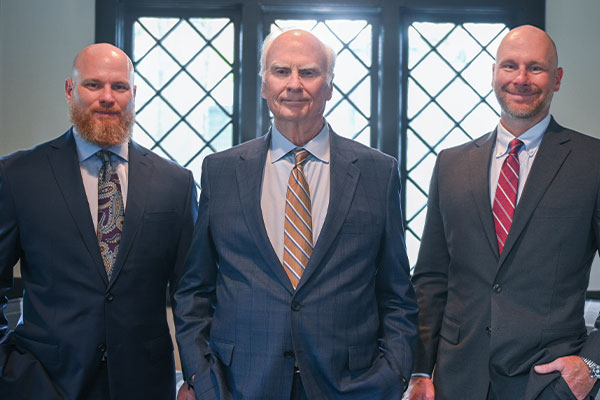
Only Serving People, Never Companies


However, the rules surrounding vicarious liability can be complex. In some cases, even if the driver was not performing specific job duties at the time of the accident, the employer may still be held liable if the actions were closely related to the driver’s work responsibilities. For example, if a truck driver causes an accident while taking a short break or on their way to a job, the employer might still be responsible, depending on the circumstances.
Exceptions to Vicarious Liability in Truck Accident Cases
There are certain exceptions to vicarious liability in truck accident cases. One exception is when the truck driver was acting outside of their employment duties at the time of the accident. If the driver was using the company vehicle for personal reasons, such as going to the store or visiting family, vicarious liability may not apply. Another exception occurs if the truck driver was intentionally negligent or committing a criminal act. In these cases, the employer may argue that the driver’s actions were not within the scope of employment, and they should not be held responsible.
It is also important to consider whether the truck driver was an independent contractor rather than an employee. Employers are generally not vicariously liable for the actions of independent contractors unless the contractor was performing work under the employer’s direct control or the employer’s involvement in the accident was evident.
Everyone there was very professional, knowledgeable, and friendly. My car was totaled, and I was a little intimidated talking with a couple of other lawyers in Greenville. But with Christian and Christian, not only did they answer my questions, but they did so in a way that made what could have been a hectic situation, easy. Overall, an excellent experience with high quality lawyers who truly go above and beyond and really try to get you the results or answers you need. I met Josh like 4 years ago when my Son was injured at Daycare. He was very concerned about the well being of my Child and Me. Very Understanding Professional and Just a great Staff. If You need a Lawyer that’s all about YOU this is the Place. I just closed a Case on 6/23/2021 from a injury on a Property. They handled everything because no one else would help Me. I’m forever grateful for Your hard Work and Time. Once again Thank You Josh and Sally. My husband was referred to this law firm from another lawyer after his mother passed away while residing in a nursing home. Matt took on his case and we are pleased with how everything turned out. It took a long, long time to finally settle, but it was worth the wait. The staff here is friendly and I’d be happy to recommend them to anyone needing legal assistance. I was referred to Harold by a family friend, and I couldn’t be happier. He took the time to listen to my case, answered all my questions and truly treated me like a friend not a client. His knowledge of medical malpractice is priceless he actually successfully won, one of the first medical malpractice cases in Greenville County.
—Rob Young
—Rezillai Henderson
— Jen
— Lindsey
How Vicarious Liability Affects Truck Accident Cases in South Carolina
In South Carolina, truck accident cases that involve vicarious liability can significantly affect the compensation that victims receive. If vicarious liability applies, the employer of the truck driver may be held liable for the damages caused by the accident, along with the truck driver. This is important because it often increases the available resources for compensation. Trucking companies typically have larger insurance policies and financial resources than individual truck drivers, which can result in higher settlements or awards for the victim.
South Carolina follows a comparative negligence rule. If the victim is partially at fault for the accident, their compensation may be reduced by the percentage of fault assigned to them. However, even if the truck driver was partially at fault, vicarious liability could still apply if the accident occurred during the course of employment. This provides an additional avenue for victims to seek justice and hold the responsible parties accountable.
Proving Vicarious Liability in a Truck Accident Case
In order to prove vicarious liability in a truck accident case, the plaintiff (the injured party) must demonstrate that the truck driver was acting within the scope of their employment at the time of the accident. This can be done through a variety of means, such as showing that the driver was on the clock, driving a company vehicle, or engaging in tasks related to their job. Gathering evidence such as the driver’s work schedule, GPS data, and witness statements can be crucial in establishing that vicarious liability applies.
Value of a Personal Injury Case Choosing a Personal Injury AttorneyRelated Videos
Additionally, the plaintiff may need to demonstrate that the employer was negligent in some way. For example, if the employer failed to properly train the truck driver or did not maintain the vehicle, it could strengthen the case for vicarious liability. The goal is to show that the employer played a role in the circumstances that led to the accident, even if they were not directly involved in the crash itself.
Verdicts & Settlements
The Importance of Legal Representation in Vicarious Liability Cases
Understanding vicarious liability in truck accident cases can be challenging, but it is essential for anyone who has been involved in a truck accident. With the complexity of determining liability and proving fault, having the right legal representation is critical to the success of the case. A skilled attorney can help victims navigate the legal process, gather evidence, and ensure that all potential sources of compensation are explored.
If you have been involved in a truck accident in South Carolina and believe that vicarious liability may apply to your case, it is important to seek legal advice as soon as possible. At Christian & Christian Law, we are committed to helping individuals and families affected by truck accidents. We can assess the details of your case, explain your rights, and help you pursue the compensation you deserve. Don’t wait to get the help you need. Contact Christian & Christian Law today for a free consultation, and let us guide you through this difficult time.