Slip and fall accidents are a significant concern in South Carolina, especially during the colder months when icy conditions can make walking surfaces dangerously slick. A parking lot can easily become a hazardous area when snow and ice are not promptly addressed, leading to potential injuries such as fractures, sprains, and concussions. When someone suffers a fall in such conditions, it’s important to understand who is responsible for maintaining the property and who may be liable for the resulting injuries.







In South Carolina, the laws governing liability in slip and fall cases are based on premises liability. This legal concept holds property owners, and those who are in charge of maintaining a property, responsible for keeping it safe. Property owners have a duty to protect those who enter their property from harm. In cases where ice accumulates in parking lots or other common areas, the responsibility falls on the property owner to ensure that the conditions are safe or that there are adequate warnings about the hazard.
Understanding the complexities of liability in these situations is crucial for anyone who has suffered an injury. Knowing who might be responsible for your injuries is the first step in pursuing legal action and obtaining compensation.
The Legal Framework of Premises Liability in South Carolina 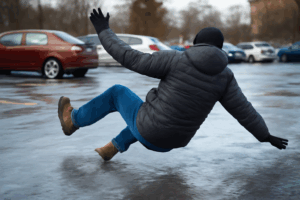
Premises liability law in South Carolina requires property owners and those in control of a property to keep it in a reasonably safe condition. This includes addressing hazards such as ice, which can be particularly dangerous in parking lots. South Carolina law imposes a duty on property owners to either eliminate dangers or provide warnings to individuals who may be at risk of injury.
The law also distinguishes between different types of visitors, each with varying levels of protection under the law:
Founded in 1975, Christian & Christian has deep roots in the community. 
Only Serving People, Never Companies


- Invitees are people who enter a property for a purpose that benefits the property owner. Customers visiting a business, for instance, are invitees. Property owners owe invitees the highest level of care and must take reasonable steps to ensure their safety.
- Licensees are individuals who enter the property for their own benefit, like a social guest. The property owner must warn them of known dangers but does not have the same level of responsibility as they would with invitees.
- Trespassers are people who enter the property without permission. South Carolina law provides the least amount of protection for trespassers, but property owners still cannot intentionally harm them.
In most cases involving a slip and fall due to ice in a parking lot, the injured party will likely be classified as an invitee, particularly if they are a customer or employee of a business. As such, the property owner has a duty to ensure that the parking lot is safe and free from hazards like ice, especially in the winter months when weather conditions can cause surfaces to freeze.
Everyone there was very professional, knowledgeable, and friendly. My car was totaled, and I was a little intimidated talking with a couple of other lawyers in Greenville. But with Christian and Christian, not only did they answer my questions, but they did so in a way that made what could have been a hectic situation, easy. Overall, an excellent experience with high quality lawyers who truly go above and beyond and really try to get you the results or answers you need. I met Josh like 4 years ago when my Son was injured at Daycare. He was very concerned about the well being of my Child and Me. Very Understanding Professional and Just a great Staff. If You need a Lawyer that’s all about YOU this is the Place. I just closed a Case on 6/23/2021 from a injury on a Property. They handled everything because no one else would help Me. I’m forever grateful for Your hard Work and Time. Once again Thank You Josh and Sally. My husband was referred to this law firm from another lawyer after his mother passed away while residing in a nursing home. Matt took on his case and we are pleased with how everything turned out. It took a long, long time to finally settle, but it was worth the wait. The staff here is friendly and I’d be happy to recommend them to anyone needing legal assistance. I was referred to Harold by a family friend, and I couldn’t be happier. He took the time to listen to my case, answered all my questions and truly treated me like a friend not a client. His knowledge of medical malpractice is priceless he actually successfully won, one of the first medical malpractice cases in Greenville County.
—Rob Young
—Rezillai Henderson
— Jen
— Lindsey
Who Is Liable for a Slip and Fall Accident Due to Ice in a Parking Lot?
When a slip and fall happens in a parking lot, particularly one caused by ice, liability can fall on several different parties. The key to determining liability is to consider who had control over the property and whether they were negligent in addressing known hazards. There are several parties that might be responsible, including the property owner, maintenance contractors, and even municipalities or government entities in some cases.
1. Property Owners
In most cases, the property owner is primarily responsible for maintaining a safe environment. This responsibility includes taking action to remove snow and ice from parking lots and walkways. If ice forms in a parking lot and remains untreated for a period of time, the property owner may be liable if an injury occurs. This applies to both private property owners and business owners.
For instance, if a customer visits a store and slips on ice that has accumulated in the parking lot, the store owner may be found negligent if they did not take reasonable steps to address the ice hazard. If the ice had been present for an extended period or if the property owner knew about the condition and failed to act, the store owner could be held responsible for the injury.
Property owners must regularly inspect their parking lots, particularly in colder months, and take action to remove any dangerous conditions. If the owner fails to do so, they may be found liable for injuries sustained on their property.
Value of a Personal Injury Case Choosing a Personal Injury AttorneyRelated Videos
2. Maintenance Contractors
Often, property owners hire maintenance contractors to handle snow and ice removal from their property. In such cases, the contractor may bear responsibility for a slip and fall accident if they fail to properly maintain the property.
For example, if a maintenance contractor was hired to clear the parking lot of ice but failed to do so in a timely manner, or if they did not use the proper de-icing products, they may be held accountable for any accidents that occur. If the contractor is found to have been negligent in their duties, they could be held liable for the injury.
Negligence on the part of maintenance contractors can be particularly significant if they fail to meet industry standards or breach their contract by not performing the required services.
3. Municipalities and Government Entities
In some cases, the accident may occur on public property, such as a municipal parking lot or public transportation facility. If the slip and fall happens on government-owned property, a municipal government or government agency could potentially be held liable. However, government entities enjoy a special protection known as sovereign immunity, which makes it more difficult to sue them compared to private individuals or businesses.
Government agencies are generally protected from lawsuits unless a legal exception applies. For instance, if the city or county is aware of the icy conditions in a public parking lot and fails to take reasonable measures to clear it, liability could rest with the municipality. However, making a claim against a government entity can be a complicated process and may involve additional legal hurdles, such as specific notice requirements or time limitations.
Verdicts & Settlements
Proving Liability in a Slip and Fall Case
To succeed in a slip and fall case, the injured party must prove that the property owner or responsible party was negligent. Negligence involves showing that the responsible party failed to take appropriate action to remedy a known hazard, such as ice.
There are several key elements that must be proven in a slip and fall case:
- A Dangerous Condition Existed: The plaintiff must show that ice or snow created a hazardous condition in the parking lot.
- The Responsible Party Had Knowledge of the Hazard: It must be shown that the property owner or responsible party knew, or should have known, about the ice.
- Failure to Act Reasonably: The plaintiff must demonstrate that the property owner or responsible party did not take reasonable steps to remove the ice or warn others about the danger.
- Injury Caused by the Hazard: The plaintiff must show that the injury was directly caused by the icy condition, and not due to some other factor.
In South Carolina, property owners are required to inspect their premises regularly and address dangerous conditions in a reasonable timeframe. If they fail to do so and an injury results, they can be found negligent and liable for the damages.
Compensation for Slip and Fall Injuries
If you have been injured in a slip and fall accident caused by ice, you may be entitled to compensation. The compensation you can receive varies depending on the severity of your injuries but may include:
- Medical Expenses: Compensation for hospital bills, surgeries, physical therapy, and other medical treatments.
- Lost Wages: If your injury caused you to miss work, you may be compensated for the income you lost during your recovery.
- Pain and Suffering: Non-economic damages for the physical pain and emotional distress caused by the accident.
- Property Damage: If your personal property was damaged during the fall (e.g., phone or clothing), you may be reimbursed for the cost of replacing or repairing the items.
To maximize your compensation, it is important to document the conditions at the time of the accident. Photographs of the ice, witness statements, and medical records can help establish liability and prove the extent of your injuries.
Why Christian & Christian Law Can Help
If you’ve been injured in a slip and fall accident in a South Carolina parking lot, the experienced team at Christian & Christian Law is here to help. Our attorneys have extensive experience handling personal injury cases, including those involving premises liability and slip and fall accidents. We understand the complexities of these cases and are committed to advocating for your rights.
Whether you were injured in a business parking lot or a public property, we can help you navigate the legal process and pursue the compensation you deserve. We offer free consultations and are dedicated to providing you with the best possible legal representation.
If you’ve been injured, don’t wait—reach out to Christian & Christian Law today to schedule your consultation.
To learn more about this subject click here: The Importance of Documenting Your Injuries in a Personal Injury Case